Health/burn: the fit life
Showing posts with label the fit life. Show all posts

Ask the Ripped Dude: How Can I Set Realistic Weight-Loss Resolutions?

 For New Year's resolutions you can make good on, follow these simple steps.

Ask the Ripped Dude: How Can I Set Realistic Weight-Loss Resolutions?

Q: For the past few years, my weight-loss resolutions have failed. How can I set resolutions that I can fulfill?

Why do people need a New Year's resolution as motivation to make positive and appropriate changes in their life? Mostly it's because a resolution is a psychological mindset, and the new year is the perfect opportunity to establish a fresh new start and set new goals. It's also the perfect time for people to make better lifestyle and health decisions and try to be better than they were the year before.

One of the reasons that people fail at New Year's resolutions is that they set broad, ambiguous, and unrealistic goals, such as, "I want to start losing weight in 2021," "I want to get in shape next year," or, "I want to be absolutely shredded starting in January." These goals are not defined. A concrete, realistic resolution would be to lose 20 pounds in three months, drop 5 percent body fat in 10 weeks, or lose 5 inches by March 1. When you can set a goal that is realistic and there is a defined timeline in which to get it done, it is much easier to accomplish.

Tips For Making Realistic Resolutions

1. Pick just one resolution, as opposed to setting multiple goals.

It is much easier to accomplish one thing that you write down and do everything possible to achieve. The American Psychological Association suggests that focusing on just one behavior at a time gives you a greater chance of long-term success.

2. Make a plan and write it down.

Write down your resolution on paper, and then list what you will do to accomplish your goal. Putting things down on paper, where you can see them, helps reinforce your motivation and makes you more accountable.

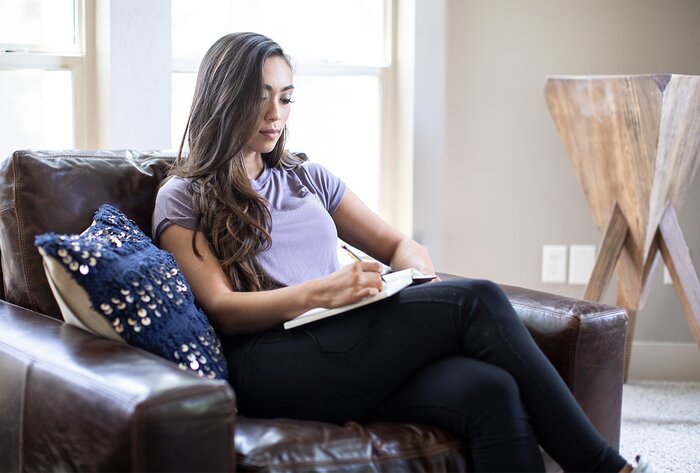
Writing down goals.

For example, let's say your goal is to lose 20 pounds in three months. What are you going to do to accomplish that? Here are some specific, achievable steps you might include in your plan:

  • Perform 30 minutes of cardio at least 3-4 days a week.
  • Perform weight training for 30-40 minutes at least 3 days a week, making sure I target every single body part.
  • Eat green vegetables and fruits with lunch and dinner.
  • Drink 6-8 cups of water per day to keep me hydrated and feeling full throughout the day.
  • Make sure that my meals are balanced with protein, carbs, and healthy fats. For proteins, I will eat chicken, turkey, fish, beef, salmon, or tilapia. My complex carbs will come from oatmeal, sweet potatoes, brown rice, beans and legumes, and whole grain pastas. For healthy fats, I will have unsalted almonds, pistachios, peanuts, and pecans; almond butter; and will cook with sunflower, canola, and coconut oils.

3. Track your weekly progress.

Seeing your weekly progress on paper will keep you motivated to continue what you need to do to accomplish your resolution. Your weekly log will keep you accountable, and on days when you are not feeling motivated, that log should kick-start you into to remembering your goal.

4. Create a support system.

You'll need a support system to help you on your New Year's resolution journey. Your family, friends, spouse, or significant other played a huge part in helping you get where you are now. Positive support from the people you care about will go a long way when you're trying to maintain your resolve. They can help you stay motivated, especially if you have some stumbles along the way.

Share:

The Secret to Achieving Your Gym Goals? Join a Fitness Community

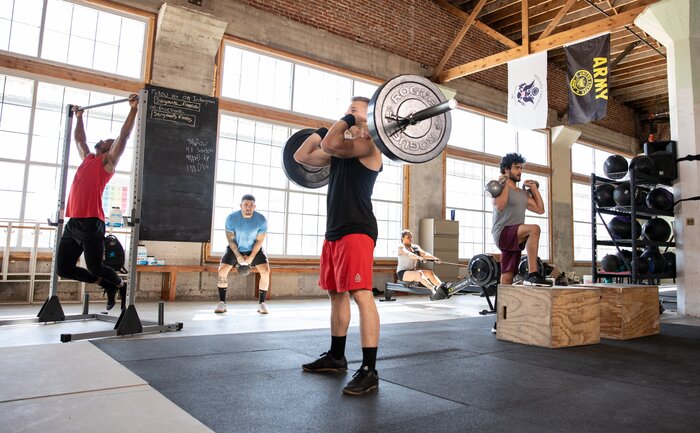
 There's strength in numbers. Join a fitness community and reap the 5 big benefits of not always training on your own!

The Secret to Achieving Your Gym Goals? Join a Fitness Community

Are you a lone wolf in your journey to your fittest, fastest, strongest self? Many fitness enthusiasts, as well as weightlifters, runners, cyclists, and swimmers, train in solitude and work toward their goals without posting their WOD on Instagram or talking to others about it. Unfortunately, their self-imposed isolation may be hindering their progress.

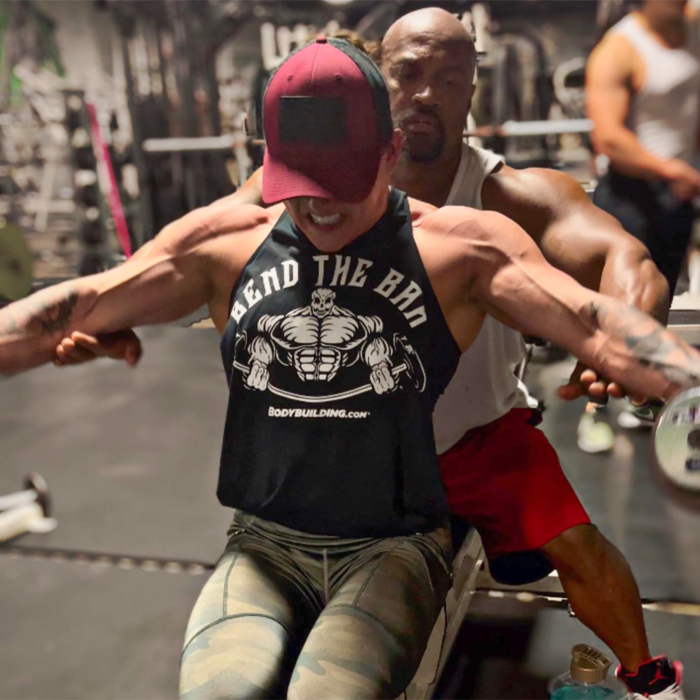
"Fitness communities—whether it be boot camps, running clubs, or even just a workout partner—all positively impact participation and effort," says Rob Bell, Ph.D., a sport psychology coach, Ironman, and ultra-marathoner who has served as a mental toughness coach for multiple winners on the PGA Tour, Olympic medalists, and at the University of Notre Dame.

In fact, one study that examined the benefits of social support on weight loss found that people who worked alone on a weight-loss program had a 76 percent completion rate—not bad, but only 24 percent of those participants maintained their weight loss. On the other hand, the participants who worked out with friends had a 95 percent completion rate, with 66 percent of them maintaining their weight loss for at least six months.[1]

Fitness communities can take many forms, including in-person and virtual options: group training sessions led by a coach, fitness classes, online communities with like-minded members (such as Bodybuilding.com), gyms catering to specific workout styles (CrossFit or Pilates), subscriptions tied to specific equipment, and programs with nutrition goals. Each one offers a different experience, and it's crucial to find the right fit for your personality.

5 Benefits Of Joining A Fitness Community

Still not sold on the idea of incorporating others into your fitness routine? Here's more food for thought on the many perks:

1. Accountability

Remember when you were a kid and the worst thing your dad could say to you when you made a mistake was that he was "disappointed" in you? Well, you'll be equally reluctant to disappoint your fitness community by skipping a workout.

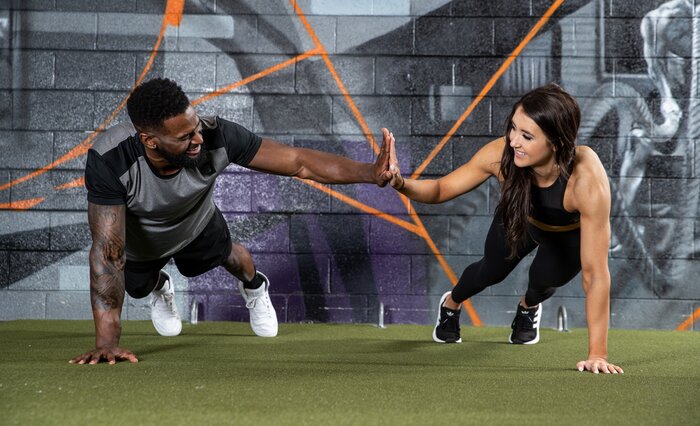
Performing push-ups with a training partner.

"Knowing that others will want us there and that our absence affects the entire group forces us to be there," explains Bell. "It's a huge external motivator to not let others down."

2. Self-Confidence

If you aren't familiar with the power of "modeling," it's the concept that seeing others do things gives us belief in ourselves—essentially, if they can do it, so can I.

"Being in the same group as others doing tough stuff enhances our own self-image and belief in ourselves because we are all in it together," says Bell. "The self-comparison, if handled correctly, enhances our own confidence."

3. Support

A strong fitness community can be a great support system when you need a pat on the back or a pep talk.

"Things will not always go as planned, so it's helpful to have people to turn to in times of need," says personal trainer Jessica Kasten, M.S., NSCA-CSCS, CPT, FRCms. "People in your community can lift you up if you're feeling down and help you identify and solve potential problem areas you may not have seen on your own."

4. Intensity

People tend to train harder when working in a group setting or with another person due to what's called the Köhler motivation gain effect.[2]

"Basically, no one in class wants to appear to be the weak one, so they will push harder than they would on their own," says Kasten. It's an ideal way to gain a competitive edge and push yourself harder.

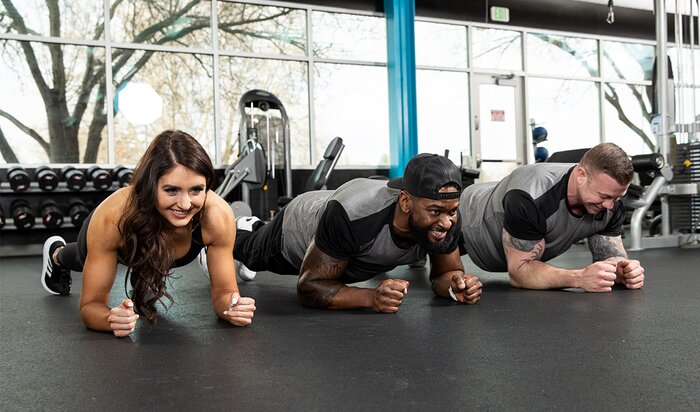
A group performing planks.

5. Knowledge

Fitness communities can be great resources for learning more about whatever fitness niche you are passionate about.

"When people engage in a community, they can share ideas and learning materials, see what is working for other people with whom they share a common goal, ask each other questions, and more," says Kasten. "It can be a great way to get new workout ideas, share recipes, or learn about a new way of doing things."

Also, It's All In Your Head

Another reason that fitness communities are valuable and motivating is that they make your brain happy by triggering the release of neurotransmitters.[3]

"Exercise induces endorphins, which can cause people to experience a sense of euphoria and also reduce the perception of physical pain," says Kasten, referring to the phenomenon often called a "runner's high." "Endorphins can also generate a sense of closeness and bonding. People who work out together and experience an endorphin rush together can develop a sense of trust with one another and feel closer after the workout. This experience can help bring people together and create new friendships."

Aside from endorphins, Bell says there are two other hormones at play: oxytocin, the chemical that drives us to be around people we like and trust, and serotonin, which supports a sense of pride.

How To Find A Community With The Right Vibe

While there's no shortage of fitness communities out there, it's not a one-size-fits-all proposition.

"Like any relationship, it can take some trial and error," says Kasten. "You may have to kiss a few frogs before you find 'the one,' but if you are seeking a new fitness community, you will know when you have found your home."

Look for a group that makes you feel good about yourself, lifts you up instead of bringing you down, is happy to help, encourages healthy competition, and ultimately makes you feel like you are part of the team.

A crossfit gym.

Not sure where to start? BodySpace is a free social fitness platform and—at 2.7 million members—is the largest online fitness community. It's a digital place to share your struggles, showcase your successes and progress pics, and interact with a network of millions of people all focused on becoming their best selves. Plus, it's full of tools to help with your transformation based on your goals, and pairs well with the BodyFit app, which contains 2,500 expert-created workouts. The Forums are also free, and categorized by topic (such as supplements, female bodybuilding, contest prep, and workout equipment). And Bodybuilding.com's social media communities are incredibly active—join the conversations on TwitterInstagramFacebook, and YouTube.

Share:

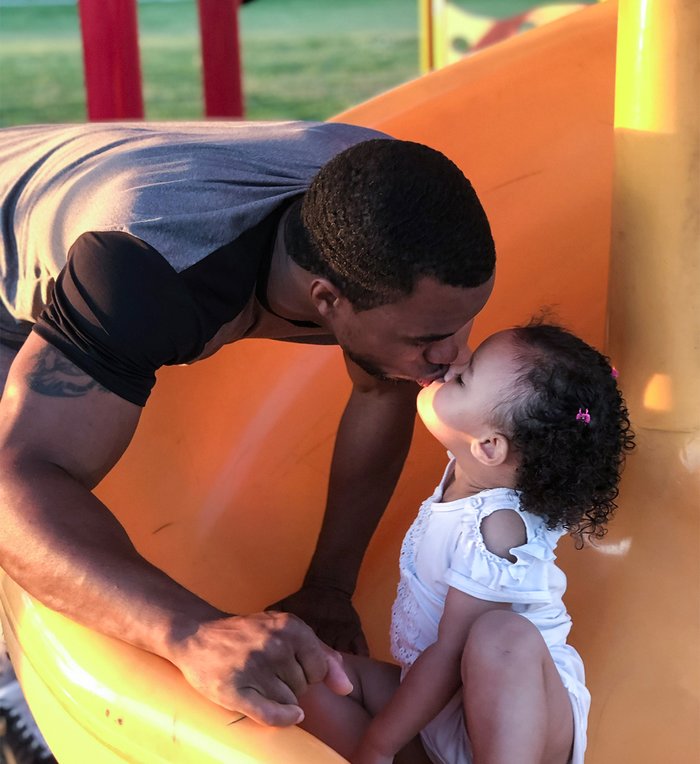
Athletes and Fathers: How Are You Passing On Your Passion for Fitness to Your Kids?

 We're celebrating Father's Day with our Team Bodybuilding.com dads. Read on to see how they share their passion for health and fitness with their children, in and out of the gym!

Athletes and Fathers: How Are You Passing On Your Passion for Fitness to Your Kids?

Passing On Your Passion for Fitness to Your Kids | Upgrade Your Dad Bod | Transform Your Bod from Dad to Rad | Cary Went from Dad Bod to Dat Bod

Dads play many roles, and to their kids, they are ultimately a superhero of sorts. They are our example of what it means to be a leader, a man, a father, a husband, a friend. Every move a dad makes, a kid wants to emulate from a young age.

With that in mind, you want to be sure that the moves you make are going to help your kids grow up to be strong—mentally and physically—and you likely want them to love the gym as much as you do. Whether fitness is your full-time job or a passion that takes up your every free moment, it's inevitable that your children will pick up on your routine and notice how important it is for you.

In honor of Father's Day, we asked the dads on our Team Bodybuilding.com roster how they hope to pass on their work ethic, health habits, and vigor for their respective sports to the tiny humans in their lives.

Mike Hildebrandt

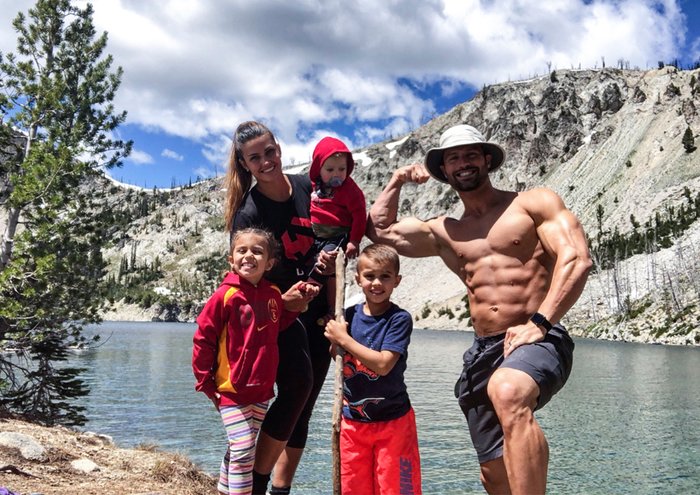
The biggest thing that I try to do is be an example to them through my actions. Our family has a motto: "Hildebrandts can do hard things." We chose this motto not only for the physical challenges that they take on in sports and fitness, but also the other obstacles that life will throw at them. When you discipline yourself enough physically, you learn that you can push through and overcome some very challenging circumstances outside of the gym, as well.

When my children see me pushing myself in the gym and having the discipline to eat healthy, I am showing them that they, too, can do hard things and conquer them. I want them to see that hard things are not bad things; they are simply challenges that require effort to overcome.

Team Bodybuilding.com Fathers Day: Mike Hildebrandt

While lifting isn't necessarily feasible for young children, we can find other ways to challenge and teach them the same lessons that come from lifting weights and fitness in general. Our family does this through hiking together. Each hike starts with a literal and figurative uphill battle. The kids complain and whine about how they can't accomplish the immense task that they are facing; however, after a few miles, they start to realize that they are doing way more than they ever thought they could. When we finally reach the summit, you can see the sense of accomplishment they feel, as their attitude changes and they start to shine with optimism and confidence.

Abel Albonetti

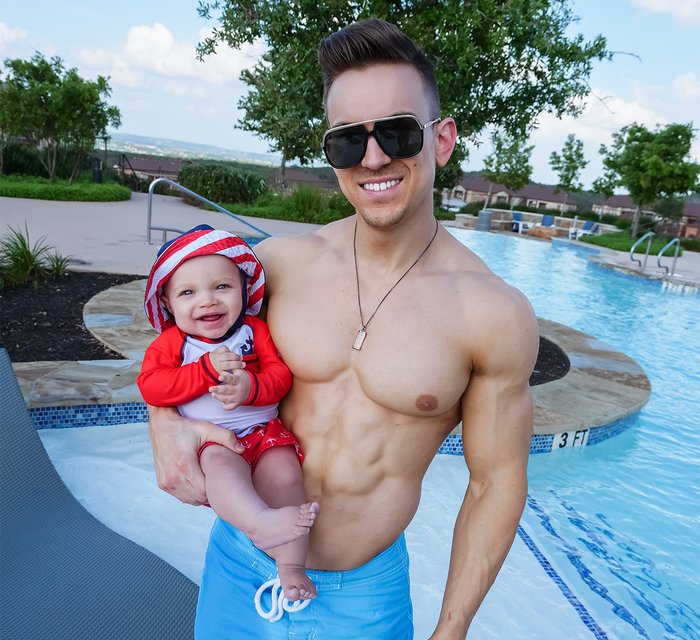
Even though my son is only 8 months old, I'm already getting him to do military crawls and squats—ha! But seriously, we live in a great area for family hikes, which we really love to do together to stay active. And we plan on putting him in recreational sports when he's old enough.

Team Bodybuilding.com Fathers Day: Abel Albonetti

Of course, I hope he'll enjoy weightlifting, like I do, when the time comes. He'll definitely be familiar with the gym since he's already tagging along some days. But we'll be leaving it up to him to decide which sport or activity he enjoys the most.

Robb Philippus

My message to my kids is this: When we approach any task in life with commitment, we have succeeded regardless of outcome. We will forever be able to learn something from those experiences because of the dedication we put into it.

With anything from strength training to extra reading, the goal is not the strength obtained or book finished. Those are both tools to improve our whole selves, an opportunity to look in the mirror—metaphorically and literally—and have the ability to say, "I am better than I was yesterday."

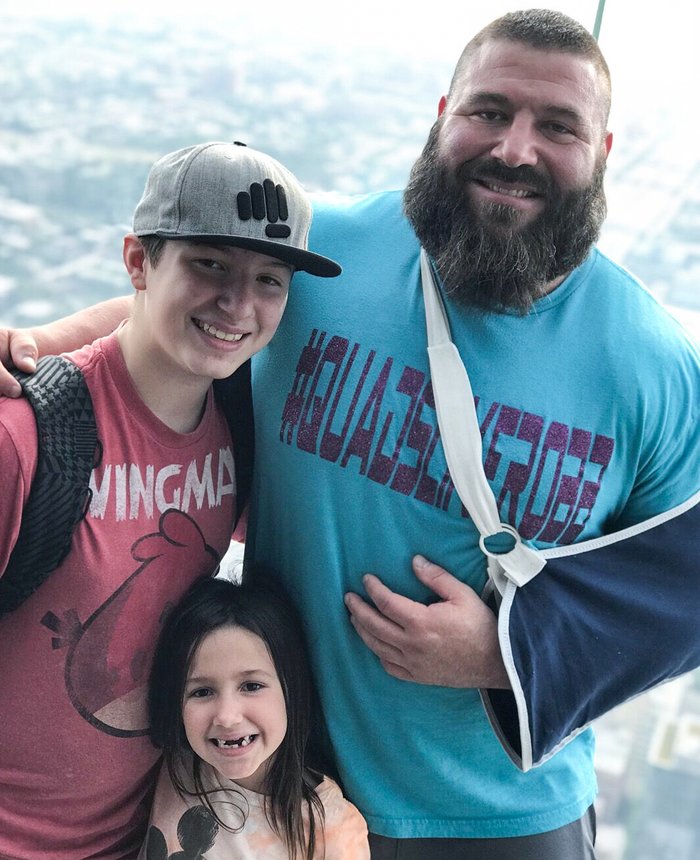
Team Bodybuilding.com Fathers Day: Robb Philippus

For Robby, specifically, I focus on this and ensuring he understands that powerlifting or lifting weights is not the end game but a means to support his wrestling or football—and his health later in life. He's naturally strong but sometimes doesn't enjoy the pain of the hard work, except when the hard stuff is over! A win for me is getting him to understand that everything hard in life eventually reveals its purpose and reward.

My baby, Kamilla, is only seven, so we focus on games and introducing some movements with a dowel. We are trying to get her comfortable being challenged and conquering those difficult things. An example of that would be swimming to the bottom of the pool or crossing the pool without trying to reach for the bottom. Last year, she tackled the challenge of jumping in and being able to swim back to the edge on her own.

I want both of them to be resistant to giving in and retaliating back and forth with each other (they like to bicker). I aim to show them they have a choice in controlling their actions, no matter the external factors. This is a movement or strength that takes practice, just the same as a deep, heavy earth-moving squat.

Myree Bowden

Health and fitness to me was never a task. Never forced upon me. Through sports and feeling good overall, I realized it came from understanding that knowledge is power, structure is practice, and routine is discipline.

Team Bodybuilding. com Fathers Day: Myree Bowden

Blessing my children by teaching them the key to longevity is taking care of your overall self gives them the choice on how they will live their life. It also explains why it will be about 30 more years before they beat me in anything physical!

Share:

I Think a Lot of Women Lift for the Same Reason I Do

 After an abusive partner nearly beat her to death, Amie Mock began lifting to make sure she would never be weak again. Now, she's gained the muscle, and the emotional strength, to let others know they are not alone.

"I Think a Lot of Women Lift for the Same Reason I Do"

Amie Mock would love to tell you that she got into lifting for purely aesthetic reasons, but the truth is she started lifting because she knows from hard-earned experience the mental toll of not feeling strong. For three years, Amie had a boyfriend who frequently beat and abused her.

Unfortunately, Amie is not alone. According to current statistics on domestic violence in the United States, it's estimated as many as 1 in 3 women will experience some form of physical, sexual, or psychological abuse committed by an intimate partner.

Being the victim of stalking, violence, and assault can lead to feelings of powerlessness, which is why so many women, including Amie, turn to the gym. For many, lifting weights is more than just a means to stay fit: it's a way to reclaim lost strength and solidify newfound independence.

For Amie, lifting has given her more than just muscle. It has helped her discover what true strength is. Now, she is using her platform as a JYM-sponsored athlete and a physique competitor to bring awareness to the pervasiveness of domestic abuse and violence and shed light on an uncomfortable truth: There are a lot of women at the gym just like her.

Here is Amie's story. — H. E.

I went into foster care when I was about 3, and early on I developed the ability to adapt to every new home. They call kids like me "chameleons," blending into different styles, different people, different rules, different schools—even different accents. You learn to adapt very well, to please everyone around you, and to hide and ignore your true feelings.

My aunt is the one who finally got me out; she moved me back to a small town in Texas. When I got the opportunity to play sports, I saw an outlet that would allow me to get all my pent-up aggression out. I did everything, I played everything, I excelled in everything. I did three times more than anyone else. I wanted to go to college and be a professional athlete.  

A lot of that extra effort came from my subconscious mind telling me I couldn't be a failure like my parents. I just had to keep going, keep pushing. When you're a kid, you're too scared to talk about things that have happened to you. For me, sports were how I coped.

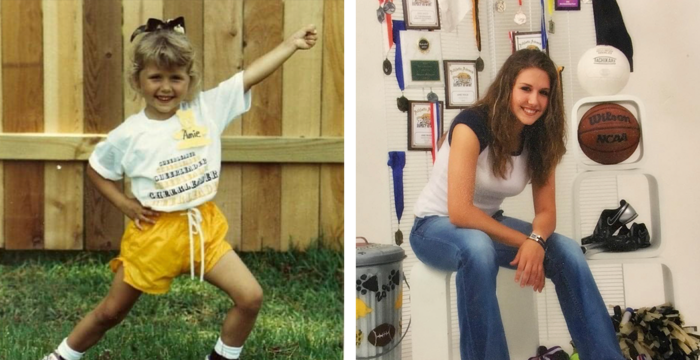
Amie Mock in her youth

Losing Direction

As I got older, I just started to veer off track. I started going to parties and doing things I shouldn't do. I did not go to college or get an athletic scholarship. I did not do any of what I had planned on doing.

My 20s had nothing to do with fitness and everything to do with partying. If you had met me then, you would have thought I was a strong-minded girl. I really thought I was.  

But now, when I look back at who I was, I realize I only felt strong because I didn't care—that's not being strong. I wasn't taking care of myself and my own issues—all I did was mask them by partying and having fun.

Found By The Wrong Person  

To a person who's a narcissist, or a sociopath, or a womanizer, someone who puts on a smile on her face and pretends to be OK is the perfect opportunity. They target you because they see you putting on a show, and they know that underneath the mask you are vulnerable.

I got into the bad situation I was in because I was relying on someone else to come in and fix all my problems. That's the worst thing—you're giving them all the power. Anything they say is right, and anything you do is wrong, and you have to believe it because you're trusting them that they're healthy.  

It took me a bit, but I had to realize I never would've been found by him if I hadn't been lost in the first place. I never confronted any of my abandonment issues about lack of love or abuse. I never took those things on, so all it took for someone to take over my life was for this man to show me any type of attention.

Soon after we got together, he moved me to Virginia. My family's here in Texas, so I was isolated. I was alone, I didn't have a car, I didn't have anything—I relied solely on him.  

It only took about a month before the abuse started. Looking back, I know I saw all the red flags from the beginning, but I didn't want to admit it to myself.

Amie Mock in darker times

I Knew I Was Going To Die If I Didn't Get Out

Being in an abusive relationship is like doing drugs: You go from soaring highs to crashing lows, then it just gets lower and lower.

My lowest point was realizing that I wasn't strong enough to fight him off. Not just physically, but mentally. It was exhausting.  

The last time, he beat me so badly he thought he'd killed me. I was lying there as I had so many times before, waiting for him to come and pick me up like a rag doll because I'd never been strong enough to pick myself up before.  

I saw the front door and the light was shining through it, and I knew that was the gateway to freedom. I knew I had to be the one to walk out, because he wasn't going to let me go and I was not going to survive if I didn't get out.  

I got up, and I ran.   

I Know What Strong Is Now

Whenever I'm under heavy weight and I can't get it up, I go back to that moment. I remember being so weak I couldn't get up, so weak I couldn't get him off me.  

I never want to feel like that again. So, the next day I come back and I push through it.

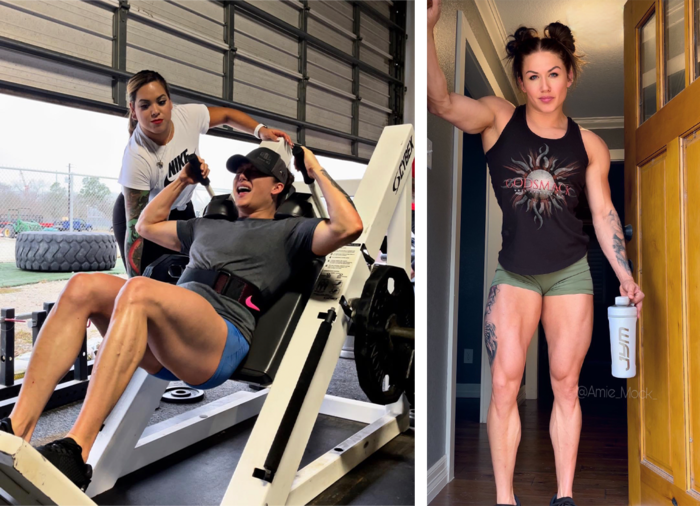
I'm now lifting weight that is hundreds of pounds more than he was. Whenever I look in the mirror and I see a muscle, it's something that I earned. Each time I fail, I know I'm going to lift that weight up next time.

Amie Mock training

I am glad that now I can see what strong is compared to what I used to think strong was; strong is facing your demons. Strong is holding yourself accountable to acknowledging what's going on inside. I have learned to open up and tell people, "Hey, I'm not doing good," or "Hey, I need to talk."  

Before, I painted over the red flags, I ignored gut feelings. I was weak-minded because I wanted affection. He saw that and took advantage of it. But I saw that opportunity to get up and run, and I took it.

I will never forget what it takes to be strong.  

We Need To Talk About It

There are way too many people who can relate to what I've been through, and that feels bittersweet. It's good to feel like I'm not alone, but if someone can relate to me, it's because they've been through it, too.

I'm not saying every girl who lifts experienced abuse—I just hope people will realize what girls like me have been through and start to see things differently. Don't criticize a girl for being muscular, ask why she feels like she needs to get stronger in the first place.  

We need to acknowledge the percentage of girls who go into lifting weights—and fitness in general—because they were abused physically, emotionally, and sexually. I am in a sport that's filled with these types of people, and yet we don't really talk about it.  

It would be great to see more support from the bodybuilding community. I'm going to make it a point that every time I compete, my bikini has purple incorporated in it. That's the color that represents victims of abuse, and I want to stand on that stage and show exactly why I'm there and how I got into this sport.

Amie Mock lifting heavy

If I can shed more light on this issue, then the world that so many of us live in won't be so dark. The more attention you put on something, the more attention it will get. I want to get to a point where it's no longer the norm to be quiet.

I would rather have an uncomfortable conversation than just sit back and allow people to be ignorant about what's really going on. This horrible thing happened to me and it's OK to talk about it. If I hide from it, it's like saying I lost.  

I'm bringing it to the surface so everyone can see how far I've come and what I'm able to do in spite of what happened. That is strength.  

It's About More Than Just Building Your Body

I started out just wanting to get out and prove him wrong. But now I look at my before and afters and it's amazing. I wish I could tell each and every person what that feels like.

It doesn't matter if all you do is lift the 5-pound weights and do cardio if that's your thing. As long as you're leaving the gym feeling good, happy, and like you've achieved something, then you did it. You're doing exactly what the person over there lifting 200-pound dumbbells is doing. You're building strength in your own way.

Amie Mock now

I'm stronger than I've ever been. I want to work hard and compete and better myself and inspire those around me. I love this sport. I love knowing that we are all trying to get stronger—mentally, physically, emotionally—and we're doing it with a similar mindset and together in the same environment. It may not be for the same reasons, but we all have the same goal.

We all want to get stronger; we all want to get better. It's a beautiful thing.  

Share:

How BodyFit Turned One Man's Life Around

 Hayden Hendricks rediscovered his love of lifting after joining BodyFit and finding a powerful way to improve his mind and his physique.

How BodyFit Turned One Man's Life Around

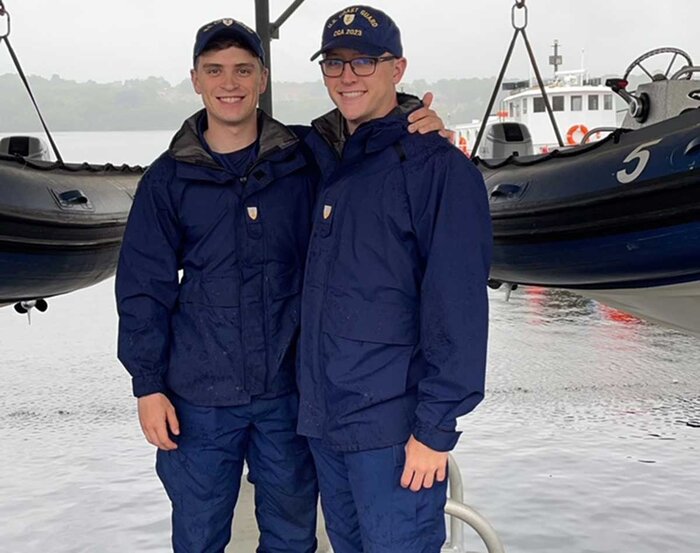
Like most young adults, Hayden Hendricks struggled to maintain the same fitness he had during high school. College weight gain, demanding military training, and COVID-19 lockdowns didn't help.

Hendricks sought answers in the gym. Determined to get elite-level instruction at a price that fit his military student budget, Hendricks found BodyFit and devoured one program after another.

A year later, Hendricks is a dedicated member of the BodyFit community and sharing what he's learned, leading by example and inspiring others with his healthy outlook.

We sat down with Hendricks to learn more about his fitness journey and his biggest takeaways from his one-year turnaround with BodyFit.  

BBCOM: Tell us about yourself. Have you always had a fitness background?  

Hayden Hendricks: I'm a third-year engineer at the United States Coast Guard Academy. In two years, I'll graduate as a commissioned officer, and I plan on pursuing a career in the medical field.  

I grew up running cross country in high school, and I was a big swimmer. I loved to play sports all the time, and I've been rock climbing for about 4 years.

Hayden Hendricks

What made you look for help with your training and fitness?

At college, my fitness kind of de-escalated. I didn't have that discipline of a coach telling me when to work out, and I kind of lost motivation and gained the freshman 15.

I needed something that could help me.

Being a college student and active U.S. military member, I don't earn a lot. I needed something that wasn't super-expensive, but something that was still going to get me where I wanted to go.

I started using one of the Bodybuilding.com workout plans. I was hooked. It shows you exactly how to do the workout and what muscles it works. It's really cool, and it wasn't hard to use at all.

What are some of your favorite features of BodyFit?

Every time I open the app, I see a workout for the day. Even if I don't want to work out, BodyFit helps remind me I have to. I know the outcome is worth it.  

I also get a discount when I buy supps, so it kind of pays for itself—I barely even notice my monthly membership. I got four tubs of really good pre-workout for 70 bucks. I can't beat a deal like that.

What goals did you set for yourself that helped you stay motivated to train?

I am very interested in physique building, which requires commitment, sacrifice, and dedication. You need a different mindset to do something like that.  

I started with the program called Chiseled. Right away the first two weeks kicked my butt. They were not easy at all. And that's what I was looking for.

Hayden Hendricks rock climbing

Were there any obstacles you encountered on your journey?  

Rock climbing is how I clear my mind. But during COVID-19 I wasn't really able to do that. We were stuck on campus.  

I had my two hours set aside to work out, and I decided I couldn't miss that time. I needed to stay dedicated and get to the gym.  

Even if it was leg day, I would go. And after, I would feel amazing. Training cleared my mind.  

Changing your physique has a lot to do with diet. Did you follow the BodyFit meal plans?  

When I followed the nutrition guide, I felt really good. My arms grew a couple inches, my chest was more defined, my six-pack came back in. Last time I had six-pack abs was high school.

Even my friends noticed. I felt a boost of confidence. I was working out and improving my weightlifting while also getting my body to look the way I want it to look.

Hayden Hendricks training in the gym

What were some of the most memorable moments of your fitness journey?  

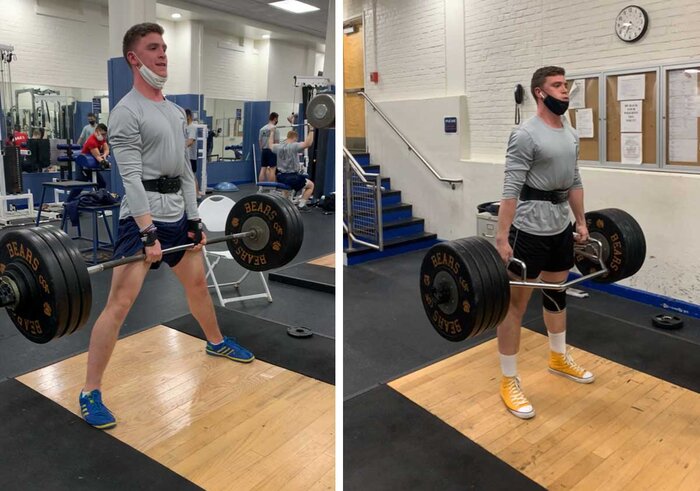
Before I started, I could barely deadlift 300 pounds. During #freakmode, I had to do a 4x4 deadlift. I calculated 85% of my 1RM, and it was 315 pounds. I didn't think I'd be able to do it, but I decided to just try and see how it felt.

It was one of my proudest moments. I was doing reps at 315 like it was nothing. Five months ago, I could not have done that at all. Now, it's like I can't stop.  
Every day, I click into BodyFit and I see my workout pop up. It's like having a coach. I can track each workout, check off what I do each day, and get that instant feeling of accomplishment. It always feels like you're improving. Having those little milestones is amazing.

What did you learn from this experience?

Find something that helps you push forward every day. BodyFit did it for me. It's super helpful, you get great deals on protein, and just the fact that I can talk to someone and connect with the community is really cool. I don't think you can find that anywhere else.

Share:

Without Bodybuilding, I Wouldn't Be Here Today

 Years of severe anorexia nearly killed Hannah Gane, until she discovered bodybuilding and learned she could make her body, and her mind, stronger than ever before.

Hannah Gane's story is unusual, but unfortunately, parts of it are all too common; after years of suffering from extreme anorexia, her illness would have claimed her life if she hadn't made a drastic change.

Inspired by images of bodybuilders and physique competitors, Gane took up weightlifting and her whole world changed. Now, instead of pushing her body to unhealthy extremes, Gane is focused on building strength and feeding her body to help it grow.  

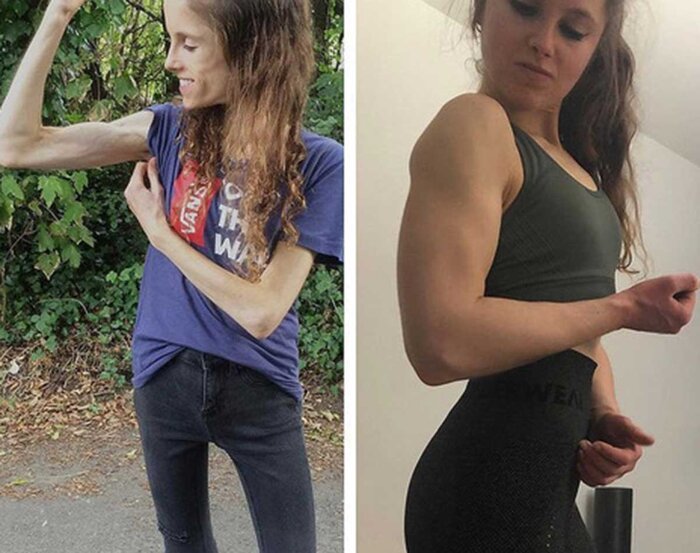
Images of anorexia are hard for some people to view, which is why Gane's transformation photos are often blocked on social media sites. In response, we sat down with her to learn more about her story and how she was able to overcome such a difficult and damaging disease, and how she's working to inspire others who might be struggling the same way she was.   

BBCOM: You have such a unique story. How do people react to learning about it?  

Hannah Gane: If you wrote my story down on paper, it's very abnormal. Severely anorexic, going into weightlifting. It just doesn't match up.

People sometimes criticize my story by saying that I'm going against the normal recovery model. The truth is there's no right or wrong way to recover. It's what works for you and what makes you recover.

Look at me now: I'm not anorexic anymore. Yes, I still have those negative thoughts, but I have completely got myself away from dying. Bodybuilding did that.

Hannah Gane before an after

What led you to develop such severe anorexia?

My dad committed suicide when I was 13 years old, and that event threw my life upside down. We had to move out of our home. Obviously, it meant all our mental health was affected. Basically, I couldn't control my life, so the only thing I could control was my food.  

I lost a lot of weight very, very quickly. It just became so easy for me because I've got very strong willpower. My willpower is so strong it could kill me, and it nearly did.  

What was the turning point?

I came home [from university] to visit my mom one weekend, and I was like, "I can't do this anymore." So, I put myself in hospital. I wasn't allowed to go to an eating disorder unit, because I was too ill—too thin—to go to the eating disorder unit. So, I had to gain enough weight to be able to go to the eating disorder unit, which sounds very stupid.  

When you're that ill, you literally lose everything. I couldn't climb stairs, I couldn't even lift my head off the floor. Your whole body just literally shuts down. 

What inspired you to finally make a change?  

You have so much time on your hands in those facilities, and there's only so many word searches you can do. I ended up scrolling through Instagram, and I saw some girls' transformation photos. They hadn't had anorexia, but they had been very, very skinny. They got into weightlifting, and now they just look amazing.  

The day I did finally choose to recover was when I hit my lowest weight. That day, I stepped on the scale and literally thought, "If I carry on, I am going to die."

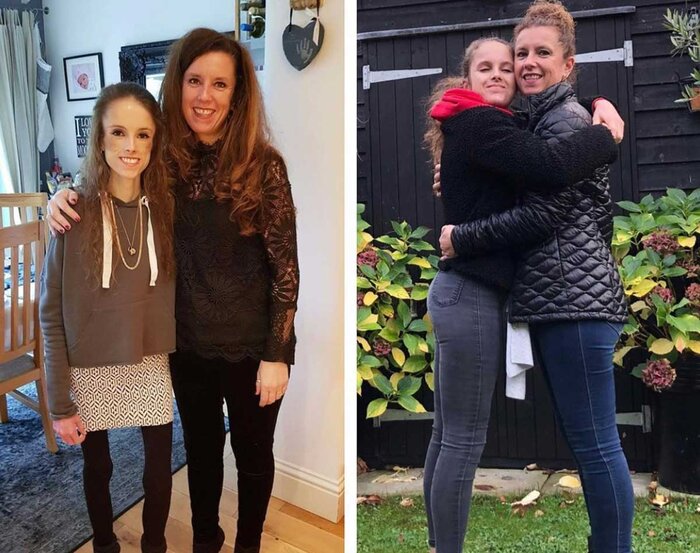
Hannah Gane with her mother

I am very close to my mom, and I know that she's already lost a husband—I can't let her lose a daughter as well. She's been by my side since day one. I can't do this to her. That's when I decided that bodybuilding was going to be the way that I recovered.

What were some of the first steps you took to get started?  

When I did first start, I got myself a coach, like an actual bodybuilding coach who was experienced in anorexia. I have severe osteoporosis, and the worst part is my spine, so obviously doing weight training I do have to be very careful. Doing it on your own when you're that ill is very difficult. I was very lucky with the help that I had.

As I got stronger, the feeling of getting stronger started to become the main focus for me. I finally started moving away from the look, and I got addicted to becoming better. 

I set myself a goal: I want to compete in bodybuilding, I want to become a pro bodybuilder, I want to go to the Olympia one day. Ever since that day, I've just said to myself, "You've got to go on. You've got to eat, you've got to train hard, you've got to stay committed to it." I've made that decision in my mind to do it, and now I will never, ever go back.

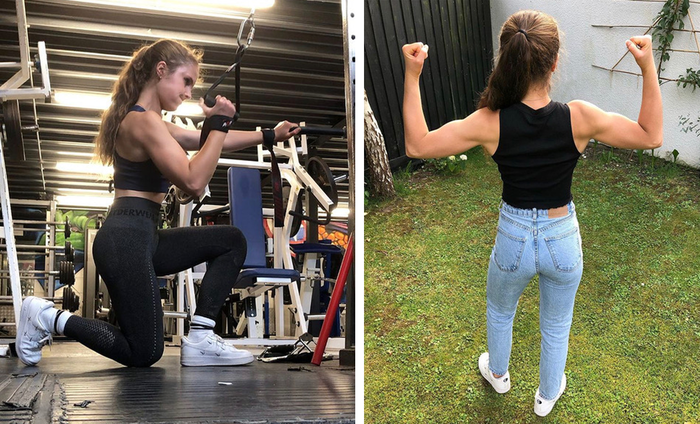
Hannah Gane training in the gym

What were some of the strength milestones you experienced?  

There was one day I was with my personal trainer and I did my first-ever sit-up. Going from literally not being able to move properly or lift my head off the floor to my first sit-up—I cried my eyes out. The feeling of being able to do that—I can't explain it. It sends goosebumps all over my body.  

I did my first pull-up during lockdown. I set myself a goal and did a 30-day challenge where I did my first pull-up. I never used to be able to do press-ups, and then I set myself a challenge and now I can do sets of 10. I remember lifting, like, 5-kilo dumbbells on my dumbbell row, and now I can do 20 kilos.  

How has your relationship with food changed with bodybuilding?  

I eat more than some men right now, and I'm proud of that. I love my food now, and I have pleasure in making meals look amazing. I've always enjoyed food, but I made it something evil when I was ill.  

Now, I know that that food is going to make me the best I can be. This is helping me get to my goal, so how can I look at it negatively? I had a check-in yesterday, and my coach increased my calories again, my macros. I just have to tell myself, "This is good, this is going to keep me progressing." Then today, I increased my dumbbell shoulder press. That's the food. That's winning.

Bodybuilding for me was the light in my life that I needed. Without bodybuilding, I wouldn't be here today. The passion has just grown, and it grows every single day. That passion will beat any anorexic thoughts, it will beat any negativity. It always wins.  

Share:

Custom Widget

3/Business/post-per-tag

Labels

Powered by Blogger.

Subscribe Us

Sign Up for Email Updates

Search This Blog

Blog Archive

Labels

Popular Posts